
Basic narrowboat maintenance
It is important to know your way round your boat for routine maintenance. You do not have to be an expert mechanic. However you will learn the important things to avoid having to employ an expert.
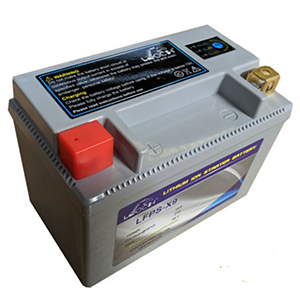 Battery Maintenance
Most narrowboats, usually, a starter battery (used to crank the engine over) and a number of leisure or domestic batteries which provide your domestic power.
- Starting your engine
When you start a diesel engine from cold you will need to warm up the cylinders with Glow Plugs. This normally powered by your starter battery, it is vital this battery be kept in top condition. This may seem a bit obvious, but if your engine is not running, the batteries don’t get charged!
- Maintenance
Maintenance is so important. To keep them in good condition you should check the level of the electrolyte (that’s the acid inside the battery) at least once a month. You top it up with distilled water if necessary. However a lot of the new batteries are self maintaining. The condensation inside the battery doing the top up job. So you need to find out which battery type you have. As a general rule, if there are no un-screwable caps then its self maintaining.
- Battery Top up
If the battery is not self maintaining, then you unscrew the cell cap and top up the level so that you cover the top of the lead plates by about 6mm or a quarter of an inch. You do this for ever cell in the battery. For more in depth explanation of batteries go here.
- Battery Security
To comply with the Boat Safety Scheme your batteries must be securely fastened so they cannot move in the case of a bump or a collision. They should also be wired as neatly as possible.
Cooling System
 On most narrowboats they are fitted with a keel cooling system, this is normally a tank with baffles on the side of the boat, below water level. This get rid of heat generated by the engine cooling it, like a car radiator.ÂHowever some narrowboats have raw water cooling system. You will find that water is taken from the canal or river, through a strainer system and heat exchanger before being pumped back out to the canal. You must check your strainer so that it allows free flow of canal water.
The waste hot water can be directed to a calorifier to a secondary coil which can heat your water when you are cruising, or running the engine.
Hoses
It is vital for you to keep an eye on the condition of ALL of your engines hoses. Hoses being rubber can perish overtime, and they split. Your journey could be brought to a very abrupt halt if a hose splits and the engine coolant runs away. Very messy too!
Anti-freeze
You must like a car if you have a keel cooled narrowboat, which is a closed cooling circuit, to ensure there is enough water in the system and filled with anti-freeze so in the winter, prevents your engine water from freezing.
I always a few spare rubber hoses, like i do fan belts and Morse cables just in case. I always recommend you join the River and Canal Rescue service (RCR). You can’t carry everything so it is at least insurance to get you on the move again
Stern Gland Maintenance
 The stern gland is an important piece of equipment vital to the function on a narrowboat. The gland seals the prop shaft from the outside water, but allows it to turn allowing the propeller to give you power. It looks like a collar. This is the called stern gland. You will find it is normally full of packing material. Most stern glands have graphite impregnated square profile rope. The rope is wound around the prop shaft and then clamped down with a compression plate and bolts.
From stern gland collar will be a plastic tube, runs to a Stern Gland Greaser. The greaser has a twister plunger which forces grease along the tube into the collar to aid sealing and lubrication. The Stern Gland Grease, you should fill with water resistant grease
 Refilling the Greaser is usually simple, but it a bit messy.
- First, fully unscrew the plunger.
- Then unscrew the entire stern gland greaser body from its mounting plate.
- Unscrew the plunger from the stern gland greaser body.
You have now the hollow brass tube, and a plunger. In the grease tin you buy to fill the greaser body is a large disc with a hole in the centre. Push the hollow brass tube down firmly over the discs with the hole. This will force fresh grease into your greaser tube. Once refilled, just re-attach the plunger, wipe off any excess grease and re-screw the whole assembly back onto the base plate.
REMEMBER when you stop, screw down the greaser to seal the shaft for the night. Grease Glands do drip a little as the grease wears away, so try having a drip tray under the gland collar.
You will find however water lubricated glands that do not have a greaser. You will find these are normally fit and forget with no maintenance. They do needs a small amount of special grease every 300 hours or so. However always check them as they can and do leak over time. Emergency fix is to use a large syringe and silicon grease to put into the service grub screw. This will act like the greaser at night.
The Drive Belt maintenance
 The drive belt or fan belt on a car, are subject to greater frictional demands on a narrowboat.
This is because of the greater level of 12v electrical appliances now found on a boat, and large charging equipment. You will find that your engines drive belt is usually connected to the alternator and water pump via the crankshaft pulley of the engine.
- Fitting drive belts
The easiest way to change a belt, is to slacken off the alternator mounting bolts, push the alternator in to release any tension and unloop the belt.
To refit hook the new drive belt over the drive pully and water pump pulleys, back over the alternator pulley and then applying tension to the belt by pulling the alternator back out. This may take a bit of effort. If you use a bar you can tension the belt then lock off the alternator bolts.
To get the correct tension if you can just twist the belt by between a quarter and half a turn then you tension is about right. Do not over tension, else you will damage component bearings. Also remember that belts have a tendency to stretch with age, so examine the belt regularly, and certainly check it shortly after changing it.
OIL
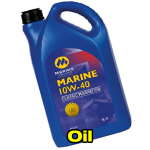
Your engine needs oil to run. Without it, the engine will cease up and stop working. You must replace your oil on a regular basis (see your engine instruction booklet).
Unlike a car narrowboats run on hours of use. The average oil change time is 400 hour or at least once a year. This includes your oil filter.
- Gear box Oil
This also goes for your gearbox which is between your engine and the prop shaft. This should be change at the same time as the engine.
- Oil Grades and Types
Types of oil for your engine and gearbox differ to be very careful with the types and grades. I always use mineral oil like Morris. However NEVER mix mineral with synthetic oil, else you will end up with stuff that looks like frog spawn, and can do damage to your engine.
- Check your Oil
Checking your oil is very important. Look down in your engine bay and see if there are any leaks. if so you should find out where from. An engine seal may have gone and you could cease your engine over time.
Use the dipstick on the engine to ensure it is the correct level. You can do the same with the gearbox. They are usually the filling nut, which has a dip stick under it.